


Celebrant vs registrar vs humanist celebrant: what's the difference?
Celebrant vs registrar vs humanist celebrant: What's the difference? Ceremony...

Here, Dan Harley, founder of Group Escape Houses explains why more couples are forgoing the traditional wedding venue in favour of taking over an entire house.
The traditional wedding runs something like this: ceremony at two, photos until four, sit-down meal, speeches, first dance, taxi rank by midnight. Guests scatter across three Travelodges and a Premier Inn.
There's another way to do it, and it's quietly becoming the format couples come back raving about. You book one large house for the whole weekend — Friday to Sunday, sometimes longer — and everyone stays under the same roof. The wedding happens there, or nearby. But instead of a six-hour event, you get three days with the people you chose to invite.
We list large houses across the UK for exactly this kind of booking, and the shift has been noticeable. More couples are enquiring about whole-house weddings than at any point in the twenty-plus years we've been running group celebrations. The appeal isn't hard to understand: when thirty of your favourite people are already in the same building, most of the logistics involved in planning a traditional wedding simply disappear.
|
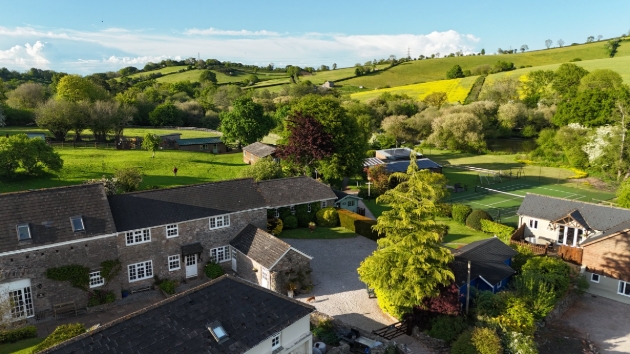
| Credit: Image courtesy of Compton Pool Farm / Group Escape Houses |
The three-day shape
A whole-house wedding weekend has a natural rhythm that most couples land on, even without a planner telling them to.
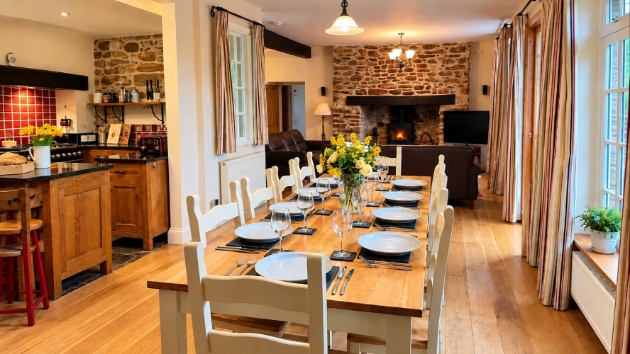
Friday is arrival day. Guests turn up through the afternoon and evening, dump bags in their rooms, and settle in. No schedule, no formality. Someone opens wine. The kitchen gets going with something simple — a big pot of chilli, a curry, platters of cheese and bread. It's the bit where both families actually meet each other properly before the ceremony.
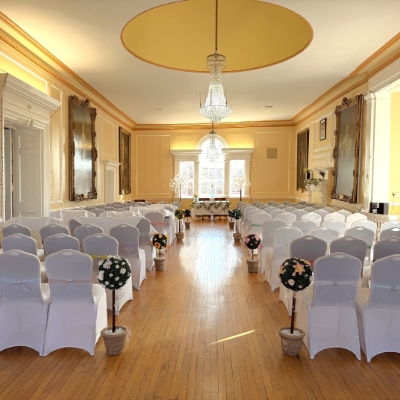
Saturday is the main event. If the house is licensed for civil ceremonies, the whole thing can happen on site — in the drawing room, in the garden, wherever suits. If it isn't, couples typically book a nearby registry office or church for the legal part (often just half an hour with close family), then come back to the house for the celebration. Either way works. Outside caterers set up in the house's professional kitchen, a florist dresses the rooms, and by the afternoon you're married in a place that already feels like yours because you slept there the night before.
The evening keeps going as long as people want it to. No taxis to book. Everyone's already home.
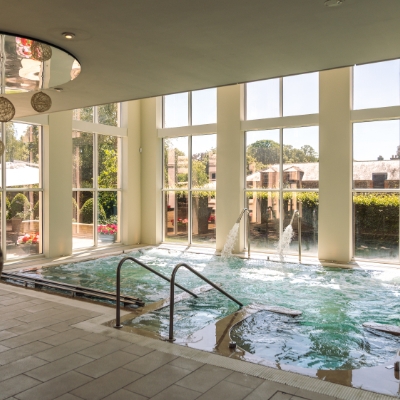
Sunday is the part that makes the format. A long, slow breakfast. Stories from the night before. The dog running around the garden while someone nurses a coffee in the hot tub. Children playing. It's the day couples consistently say was their favourite part. You don't have to plan it. It just happens when nobody needs to be anywhere.
|
| Credit: Image courtesy of Compton Pool Farm / Group Escape Houses |
Feeding thirty people, twice a day
This is the question that worries couples most, and it's the one with the simplest answer. Large houses set up for group stays almost always have professional-grade kitchens — the kind outside caterers can work in without compromise. You're not trying to roast a lamb in a domestic oven.
For Saturday, most couples hire a caterer for the wedding breakfast and the evening food. The rest is easier than you'd think. Friday night wants something communal and unfussy that can sit on a table and feed people as they arrive. Sunday brunch is bacon, eggs, pastries, fruit — whoever's up first puts the coffee on.
Some houses have relationships with local caterers and can point you in the right direction. Others leave it entirely to you.
A realistic budget for catering across the whole weekend, for thirty guests, sits somewhere around two to four thousand pounds depending on how elaborate you go on Saturday. That's the caterer's fee, the ingredients, and the drinks.
|
| Credit: Image courtesy of Compton Pool Farm / Group Escape Houses |
The ceremony question
Licensed houses make it simple: your registrar comes to you, and the ceremony happens wherever in the house or grounds you choose. But most large houses aren't licensed, and that's fine — it doesn't limit you nearly as much as you'd think.
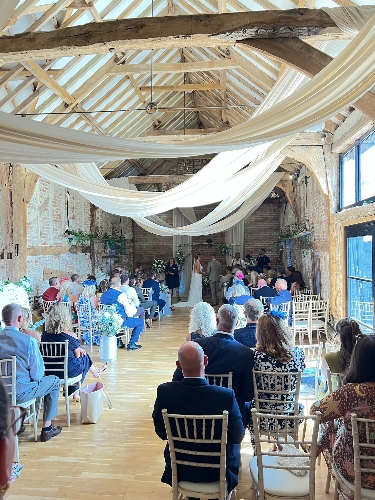
The most common setup is a short legal ceremony at the nearest registry office or church, with just parents and witnesses, followed by the real celebration back at the house. Some couples do a humanist or symbolic ceremony at the house (which doesn't require a licence) and handle the legal bit separately, even on a different day. Others find a licensed venue within ten minutes' drive, do the ceremony there, and bring everyone back for the reception.
The point is that the house is the heart of the weekend regardless of where you sign the register. It's where people wake up, eat, celebrate, dance and fall asleep. The ceremony is one half-hour within a sixty-hour weekend.
What it actually costs
A large house sleeping 25 to 40 guests for a Friday-to-Sunday stay typically runs between £3,000 and £8,000, depending on the house, the location, and the time of year. Add catering, flowers, a photographer, and whatever else matters to you.
The arithmetic that surprises people: when you divide the house cost between, say, thirty guests staying two nights, you're often looking at a hundred to two hundred and fifty pounds per person for the accommodation. That's less than two nights in a hotel near most wedding venues — and this time, everyone's together.
What you're not paying is the bit that makes traditional venue weddings expensive: room hire, per-head catering minimums, corkage, cake-cutting fees, evening food surcharges, ceremony room supplements, exclusive-use premiums. The house is the house. You pay for it, and it's yours.
Making it work practically
A few things worth thinking about early:
Book the house first, then build around it. The house sets the capacity, the location, and the feel of the whole weekend. Everything else — caterer, registrar, florist — follows from that choice.
Check ceremony options before you fall in love with a house. If having the legal ceremony on site matters to you, ask whether the house holds a civil ceremony licence. If it doesn't, look at what's within a short drive. Most areas have a registry office or church within fifteen minutes.
Think about the Sunday. You don't need to plan it, but you do need to have food in. A big shop delivered on Thursday, or a local deli order, means nobody has to leave the house until checkout. The best Sunday mornings happen when there's nothing to do and nowhere to be.
Tell guests what to expect. People who've never been to a house wedding sometimes don't know the format. A quick note with the invitation — arrive Friday afternoon, ceremony Saturday at two, leave Sunday after lunch — sets expectations and stops anyone booking a hotel.
Don't overplan. The whole point of a house wedding is that it breathes. Leave gaps. Let people find the library, or the garden, or the games room. Saturday night doesn't need a DJ if someone's brought a speaker and a playlist. The best house weddings we hear about are the ones where couples trusted the setting and let people be.
If you're thinking about booking a large house for your wedding weekend, find out more at www.groupescapehouses.co.uk/group-occasions/weddings